CHAPTER 1
Love, Loss & Awakening
This is where the journey begins.
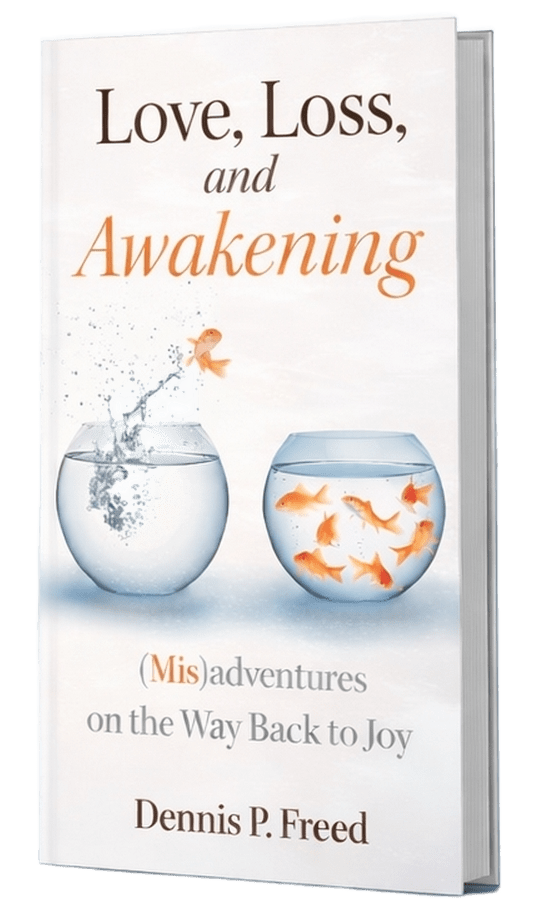
Love, Loss,
and
Awakening
(Mis)adventures
on the Way Back to Joy
Dennis P. Freed

LOVE, LOSS, AND AWAKENING
(Mis)adventures on the Way Back to Joy
Copyright © 2016 Dennis P. Freed
All rights reserved. No portion of this book may be reproduced in whole or in part, by any means whatever, except for passages excerpted for purposes of review, without the prior written permission of the publisher. For information, or to order additional copies, please contact:
Book production and design by Cypress House
Cover image: © Romolo Tavani – Fotolia.com
Interior photo credits courtesy of the author’s archives
PUBLISHER’S CATALOGING-IN-PUBLICATION DATA
Names: Freed, Dennis P., author.
Title: Love, loss, and awakening : (mis)adventures on the way back to joy / Dennis P. Freed.
Description: First edition. | New York, NY : Tolawaken Press, [2016]
Identifiers: ISBN: 978-0-9971916-1-5 (paperback) | 978-0-9971916-3-9
(hardcover) | 978-0-9971916-2-2 (ebook) | LCCN: 2016931395
Subjects: LCSH: Widowers–United States–Biography. | Spouses–Death–Psychological aspects. | Cancer–Patients–Family relation-ships. | Cancer–Patients–Biography. | Married people–Psychological aspects. | Grief. | Bereavement. | Loss (Psychology) | Dating (Social customs) | Mate selection. | Widowers–Life skills guides.
Classification: LCC: HQ1058.5.U5 F74 2016 | DDC: 306.88/20973–dc23
I have recreated events, locales, and conversations from my memories of them. I have changed the names of several individuals and places in order to protect their privacy, and in some instances I may have changed identifying characteristics and details such as physical properties, occupations, and places of residence. All opinions expressed in this book are my own.
To my readers:
This book was first published in January 2016. Based on reader feedback, I have added three new chapters, revised one chapter, and slightly changed the ending. I trust these changes will provide the clarification those readers requested. My next book will further stretch our relationship boundaries, and I look forward to sharing it with you.
Dennis
“Every joyous minute lost with your best friend, lover
and spouse is a minute never to be seen again.
Sometimes tomorrow just never comes.”
Dennis Freed
“I Love You, Denny.”
Hope Freed
“Is there a God?” “Is there something else after we die?”
“Is our deceased loved one really watching over us?”
Every one of us!
“Love is a never-ending adventure.
Love is not a journey but an adventure! A journey is only to travel from place to place, but to adventure is to explore, with both mistakes and successes, with twists and turns, that lead to exciting new discoveries and opportunities”
Dennis Freed
I dedicate this book to four people, one-hundred-plus women, and a single rabbi.
My late wife and love for thirty-two years, Hope Freed, without whose kind, humorous, and childlike exploration of the world I would be nothing but a selfish, unhappy man.
My parents, Babette and Mel, and in-laws, Harriet and Bernie. From them, my children and I gained insight into what it’s like to grow old together. I list each couple as one because they truly are one. Marriage isn’t constant joy but an understanding that it could be worse, and that it gets better every day because you can kiss each other good morning.
My new friend Joan Marans Dim. We are widow and widower. We stumble around our new life together, helping each other realize we were blessed once and will not settle for anything less than a future of smiles.
The hundred-plus women I dated, interviewed, met for coffee, and frolicked with. I sincerely apologize for the mistakes I made, and I thank you deeply for the sometimes not-too-pleasant lessons you taught me. We all were just trying to survive, find a soul mate, and achieve an end to a single life imposed willfully or unwillingly upon ourselves.
And to the rabbi: “You’ll just have to read the book to find out.”
Contents
Preface……………………………………………………………………………………
Introduction……………………………………………………………………………
Chapter One: Hope…………………………………………………………………
Chapter Two: Vietnam……………………………………………………………
Chapter Three: The Rabbi……………………………………………………….
Chapter Four: One Big Happy Family…………………………………….
Chapter Five: Her Tear…………………………………………………………..
Chapter Six: Decisions……………………………………………………………
Chapter Seven: Divinity, Part One— Understanding…….
Chapter Eight: Hole Heart/Whole Heart…………………………………
Chapter Nine: The Awakening, Part One — Serpent Tongue…..
Chapter Ten: The Parrot…………………………………………………………
Chapter Eleven: The Awakening, Part Two — Nair Nipples……
Chapter Twelve: A Hundred Bottles of Beer on the Wall…………
Chapter Thirteen: The Boardwalk……………………………………………
Chapter Fourteen: Ego Penis…………………………………………………..
Chapter Fifteen: Home……………………………………………………………
Chapter Sixteen: Fucked Up……………………………………………………
Chapter Seventeen: Against the Gods……………………………………..
Chapter Eighteen: Corona………………………………………………………
Postscript………………………………………………………………………………..
About the Author……………………………………………………………………
Resources……………………………………………………………………………….
Preface
I awoke at 4:00 am and could not get back to sleep. As is commonplace in our society, I reached for my iPhone to read my emails. An email from a dear friend, Joan, rested in my inbox. Joan and I shared the last year together, not as lovers but as widow and widower friends trying to survive a new life without our best friends, lifetime guides, and confidants—our deceased spouses. I was reluctant to read the email. Joan and I had been through so much together, and at 4:00 am. I wasn’t sure I wanted to start my day in the history-hell of remembrances.
After reading Joan’s email I cried a deep cry of gratefulness. Together we survived the mercurial mental onslaught of a widow and widower’s inaugural months and years. We both refused to accept a fate mired in sadness as we shared our lives and deepest, most secret histories in an attempt to regain a foothold in joy. We both were finally accepting our deceased spouses’ approval to live a new life without them.
Prior to Hope’s death, I didn’t fully comprehend the power of “The Dark Night of the Soul.”[1] After her death, “The Dark Night of the Soul” followed me, played peek-a-boo with me, and led me for a spell until I was liberated. But, like Lucifer himself, that night eventually vanished into the dark realms whence it came. My soul and mind were purged and were ready for the next phase. Love, Loss, and Awakening embraces many of my struggles as I emerged from the bloated physical and mental sadness.
As the next chapter of my life unfolded, so did the many questions of Divinity, our purpose in life, and what awaits after our human form ceases to exist. I originally started to write Love, Loss, and Awakening as a cathartic memoir, but so much more evolved as my pen touched the page. Divinity became a guiding question.
I like to reference life through examples. Two films illustrate the essence of this book: Blade Runner and The Adjustment Bureau. Blade Runner has long been on my all-time top-five list. The ending scene with Deckard and Roy Batty, the antagonist in Blade Runner, fighting to the death, and then the paradoxical saving of life, has weighed heavily in my thoughts. I share it with you to better understand Love, Loss, and Awakening. We all wonder about life and death, but a person who has lost a soul mate, someone he shared a bed with for decades, finds that question tearing at him throughout the next part of his life. How do we accept this death and not dishonor the departed if we think they are looking over us? Was there a Divine purpose for their life with us as well as their death?
As Batty’s life ends he compares it with tears lost in a rainstorm. Will all those amazing sights he witnessed really be lost like tears in rain? Each raindrop gives birth to a new beginning, eventually evaporating to start the life cycle over again. Is this our existence? Did our spouse die only to water a new cycle of life?
Deckard watches as the dying Batty contemplates his preprogrammed brief life span. We watch each other die, too. With each deathwatch, questions trouble the very fabric of our existence—how much longer have we got, and how are we to live this life? Each deathwatch ultimately ends with our own questions: “What’s next for me?” “Is my behavior on this earth being watched and judged?” “Is there a master plan?”
As for the importance of The Adjustment Bureau, I was alone in my home in Massachusetts going through some inner turmoil. I have one of those televisions with all the Bose System wires and connections only an aerospace engineer can trace to fix a problem. The TV went on the fritz and the screen looked like a version of the old TV show Outer Limits. If you’re under the age of forty-five you’ve probably not seen the show, but the screen was all scrambled as if taken over by aliens. Anyway, after I’d fumbled with the wires for about ten minutes, the mayhem stopped and the DVD went on. Playing was the final scene of The Adjustment Bureau. At exactly that moment, I really needed the reassurance “that all will be fine and trust in the Divine.” Was that coincidence or was it a message sent to me as I contemplate in chapter 17, “Against the Gods”? As it turned out, my inner turmoil was self-doubt, and everything was as it should be.
Love, Loss, and Awakening is a compilation of vignettes that parallel not only my life but also the lives of those who traveled with me. I started writing it one year after Hope’s death. The first chapters were “Hope” and “Her Tear.” As the years of my widower’s life progressed, future chapters emerged, culminating almost four years after Hope’s death. Let’s journey together through sadness and laughter, through pain and pleasure, through loss and discovery as you read Love, Loss, and Awakening.
Dennis
August 2016
Introduction
Being a long-term caregiver to your spouse differs from other types of caregiving: Your caregiving for your spouse parallels the caregiving for a child or elderly parent. Partnership intimacy fades as the illness expands. Conversations about the future diminish as you witness your partner dying and notice the seething regret in their eyes. You need to choose your words carefully, as if you were speaking to your children. As your role takes on new meaning, so does your devotion. Your love grows on many different levels—as that of a spouse, best friend, and now parent. You find yourself making decisions with all those roles to consider.
And one day your spouse, lover, and very best friend dies. After decades, you’re alone to figure out your future on your own. No best-trusted friend to bounce ideas off of; no best-trusted friend to help pick up the pieces of a decision gone awry. Friends and relatives can’t understand the emptiness unless they also are widows or widowers. Even then, their relationship was not yours, for no two relationships are alike. The road to a new future is individual and constantly changing as the new and varying experiences multiply. Your past way of life, your morals, and opinions are constantly trying to find the serenity that has left you. Your children, parents, and friends are constantly questioning and unwelcoming, invading this new life you stumble around in. The peace of familiarity is replaced with uncertainty. What new inner peace will you find?
Damn it—my Best Friend just died! What the hell am I to do? But as the journey unfolds there is always one friend who’s there 24/7 as you weave a new life. That friend always listens, never speaks unless asked for direction, and their words of wisdom, though never audible, are clearly understood.
Chapter One
Hope
I was on an interesting date. She was an attractive, petite, intelligent woman, and roughly ten years younger than I. She was the perfect image of my next spouse. We all have images of whom we will marry or, if married, whom we’d want to marry if we had to do it again. Dreaming is so much fun without real-life consequences.
With much in common we talked for hours. I focused on her pleasing steel-blue eyes and our delightful conversation as we sipped our chardonnay at the boutique Italian restaurant in Hell’s Kitchen in Manhattan. The atmosphere was splendid. Aged brick walls, hammered-tin ceilings, and low-level music surrounded us. Everything was going well.
Twice during dinner my companion pulled out lip gloss and redecorated her lips with that fine kissing coating—an indication, I hoped, that she liked me, wanted a goodnight kiss or more, and would see me again, but then she asked me a question that turned into a fatal dating error:
“What was the best thing you ever did in your life?” she asked.
“Do you want my real answer?” I asked.
“Of course,” she said.
“Marrying my wife, Hope, at twenty-two,” I said.
The look in her eyes changed ever so slightly from pleasant to inquisitive, and I hoped my reply appeared loving. Instead it seemed to put her on the defensive. Maybe she was wondering if she could ever measure up, or if I was truly over my wife’s death. Then I buried the hatchet (in myself) and added: “I married a Rolls Royce, and one day I will find a Bentley.”
“I see,” she said in a tone that made clear this date was over and all my lustful imaginings would never be realized.
A friend of mine later told me that women find such a statement offensive—never compare a woman to a car.
After each date, you see, a widower must master a new self-control and learn what he can and cannot say. For decades, as a husband, I always replied honestly to whatever Hope asked, without thinking about consequences. That doesn’t mean my responses were always pleasing or correct, but Hope always knew I meant well and accepted my apologies. Not so with a date. I probably should have known that, but if I had said this to my Hope she would have shrugged it off, informed me it was offensive, and then accepted me for me. Such mistakes aren’t tolerated in the dating game, however, so the second date never occurred. Shortly thereafter the attractive woman sent me an email saying I was not her type. She wished me well and hoped I’d find my Bentley.
Another lesson learned without Hope to guide me. My wife was my conscience, you see. She would pull me back from my excesses or tactfully let me know when I’d made an inappropriate comment. I’m on my own now and must be my own conscience and regulator. My wife and I had unbroken trust and knew unquestionably that we would never intentionally harm each other. Oh, how I miss that unconditional trust, sharing mistakes that are understood as unintentional, and the general understanding that we would not hurt one another. Speaking to my peers who are widows or widowers, this is a common essential piece missing in our lives—something we took for granted and now long for so dearly.
Still, I am learning after more than a year and a half years of being a widower that I had an amazing marriage. Mainly because of Hope’s character, our marriage steadily grew over the thirty-one years we lived together. Hope was a gifted woman, and I was lucky to be married to her. She hadn’t taken the prescribed path upon graduating high school. She traveled and worked all over the United States, Egypt, and Israel until she was twenty-one, learning life as she unraveled it.
It was her travels and mine that cemented us together in our first meeting at a Halloween party at our town’s local disco. I had graduated from college five months before. Neither of us liked disco, but friends urged us to go that night. We both grew up in Oceanside, New York, and went to the same elementary, junior high, and high schools, so we had many mutual friends.
Hope was a year younger than I and always popular. I wasn’t. I was shy around girls. The other boys hung around that cute little red-haired girl named Hope. Our paths crossed sometimes, but we never spoke to each other before that Halloween night. After our first meeting we began to fall in love immediately. My parents tell me I came home from the party, woke them up, and said, “I think I found the girl I’ll marry.”
Two and a half months later, Hope and I were engaged. Ten months after that, we were married. We bought our first and only home a year after we wed. After six years, and many travels around the U.S. and Europe, we started our family. April 7, 2012, almost thirty-two years after we first met that night, Hope died in the only house we ever called home.
Hope was stunningly beautiful, inside and out. As my neighbor often said, “You could strike a match off her cute little body.” She had pleasing red hair, not the kind that was bright orange but the kind that movie actresses toss around. She loved to dress funky, and clothes and playful accessories were her hobby and passion. Her clothes only further graced her frame and personality. After Hope’s death from cancer, one of her coworkers said, “Every morning we would wait to see how Hope dressed. We all knew we could try to copy her, but no one graced the style like she did.”
Hope’s smile could melt any ill intention, and her soft, soothing voice could calm us in the worst of times. Her knack for making you feel at ease with her choice of words, coupled with her unwavering patience, made her an exceptional educator and a person others sought out for advice. Her personality made you feel comfortable, like wearing your favorite pajamas. Later in her career she used these personality traits to help thousands of people live better lives. Hope’s personality, combined with her undaunted seven years of courage to fight cancer, served as an example to many that they too could beat life’s difficulties.
Hope’s quest to live and share with others was buttressed by her reading, learning, and implementing every New Age holistic concept (food, meditation, sound therapy, qigong, psychological, social) she could lay her hands on. These soothing, educational, sharing, and endearingly comfortable attributes earned her the nickname “Hopey,” which fit perfectly. She was all our “Hopey.” After Hope and I had been married a year, my mother convinced Hope to become a teacher. She embraced this vocation with her entire soul. She became a kindergarten teacher, and the students adored her. They called her Ms. Hope.
An innovator in the classroom, Hope cultivated the kids’ love of learning. She taught them mental stillness, meditation, and qigong, a Chinese holistic system of wellness, many years before these practices became widely known or accepted. When she taught art she didn’t just have her students paint. Oh, no, she taped brown paper under their desks and had them lie on their backs to paint like Michelangelo—just as he painted the Sistine Chapel. Real fun was when she taught the kids about the abstract art of Jackson Pollack, and they flung paint onto their canvases. Valentine’s Day was always a special treat: Hope would bring a real cow heart into the classroom and the five-year-olds would dissect it together, exploring not only the heart but also the wonders of Hope’s imaginative teaching.
This was Hope, to live and learn the way she wished she had. As a kid she wasn’t considered a good student; she was bored and didn’t find learning fun. The cycle of boredom reinforced the school’s concept of her abilities, and she was channeled down the path of mediocrity. Later, as a teacher, Hope refused to make the same mistake. She chose to focus on every student’s interest so each could find learning fun and exciting. No student of hers was to ever leave class—as she had often done when she was a child—without the chance to excel in what they did best.
When Hope died, Newsday, the local Long Island, New York, newspaper, printed an article about her and how she’d touched so many lives. This was a testament to our dear and beloved “Hopey.” She was truly an angel and a messenger from the Divine. To validate this, she died Passover evening in the United States and Easter in Israel. She was a Divine gift lent to this world for a brief time.
Hope and I did have our difficult years. We had two boys, Evan and Ryan. Hope was a calming and loving mother, sometimes too calming. I was always the major disciplinarian because it was against Hope’s nature to administer tough love to growing boys. About twenty-one years into our marriage we hit a real rough patch. Travel ice hockey and the rigors of raising kids tore at our once happy marriage. We fell out of love for about two years, but raising our children kept us together.
I must sidetrack first to a conversation I struck up with a manager of a Costco store in Springfield, Massachusetts, while picking up groceries and paper goods for the one-year anniversary dinner of Hope’s death. Springfield is close to my second home in the Berkshire Mountains, and thirty people were coming up for the anniversary. Hope had been cremated. Her last wishes were that we spread her ashes into the lake our Massachusetts home overlooked. I could not bring myself to heed her wishes until the anniversary and was dreading the weekend.
I was alone in Costco and in an extremely depressed, introspective mood. The store manager proved to be a loving, empathetic woman, and noticed my demeanor. She initiated a conversation with a warm smile that allowed my innermost feelings to pour out. She too had been married for more than thirty years, and as I told her the story of my life with Hope, she intertwined her marriage experiences with mine and shared a profound perception that long-time married couples can really appreciate.
“Every great marriage has a moment when a couple decides whether they stick it out,” she said. “It’s the couples who stick it out and then work hard at their marriage that develop a deep, everlasting love.”
She was right. Hope and I had our difficult moments during those two years, and one morning we almost ended it. It was 5:30 am and I was crying in the bathroom, getting ready for work, knowing instinctively that our marriage had failed. Hope still lay in bed. I walked into the bedroom and she was propped up looking at me with a face I had never seen before. It was one of terror and concern, not terror of being physically hurt but terror of losing all she had worked so hard for. We stared at each other, and she started to cry too.
I said, “Do we end this?”
She was now in total control to make our decision. Her words, her answer, was so classically simple Hopey: “No, Denny, let’s make this work.” Denny was the nickname she used for me when we were happy and playing.
We hugged and kissed like people who didn’t want to leave each other, ever. The fear of never kissing again embraced each kiss and hug. After that morning, our marriage grew to one of love and understanding, getting better with each passing year. We spent more time together and worked at making our union special. We went to quite a few marriage seminars and New Age courses. Hope’s holistic learning became my quest too. She cultivated the soft psychological knowledge and I the more scientific avenues. We found a new common core to explore as a married couple, and as we did, we constantly questioned our understanding of Divinity. We shared what we learned and applied it to making our marriage better. Often it was the smallest touches that made the biggest difference.
In the mornings, before work, we left each other little love notes on the kitchen table, or tucked in our clothes, work knapsacks, and travel bags. The notes ranged from simple, hand-drawn smiley faces to details of why we loved each other so much. On occasion I would even find a note in my smelly hockey gloves as I put them on to play late at night or in my boots on ski trips thousands of miles away, which made me feel close to home.
In addition to these love notes, my wife would mail to my workplace cards with famous sonnets and phrases. I sent flowers to her kindergarten class at least twice a month, with love notes attached. Hope loved sunflowers, and when available they adorned her desk to brighten up her classroom, her students, and her day. When I cleaned out the home after her death, I found, in several files, every note we’d ever penned—hundreds, maybe thousands of them. They showed that we’d learned to enjoy being together again and cherish each other as we had during the first decades of our marriage. We never wanted to repeat that morning of decision, and we never did.
That was long ago. Now, after dating more than a hundred women and hearing their tales, I know I was the luckiest man alive. Hope and I argued, but we learned to reduce our arguments to a trickle and to no more than fifteen minutes’ duration. Time spent away from each other turned into more time together as we grew our love and marriage. Our sex life, when Hope wasn’t sick, was creative. I know from my dating experiences that many women have never explored an iota of what Hope and I shared. I’m learning that our married life was wonderful. I won’t share the details, out of respect for my wife, but even at intimacy we strived to improve our love. Let’s just say Chinese food in the bathtub could be a prelude to an evening’s delight. I truly was blessed, and only after losing my best friend and lover am I learning how wonderful life was.
I’ll share one more story of our deep love for each other. Hope was being wheeled on a gurney from the ER to her hospital room. She was a constant inpatient during the last years of her life. The orderly who was assigned to us greeted us with an understanding of how much we loved each other. He had wheeled Hope down the winding corridors before. He said, drawn out and full of endearment, “Hi, Mr. and Mrs. Freed. I hope someday I can obtain the love you two have for each other. It’s so rare and special. I just had to share this with you.”
This man confirmed, without a doubt, that Hope and I had lived with true love so often described in novels, sonnets, and movies. When Hope finally passed, my life fell into an abyss. Several months later, a dear friend of Hope’s and mine since childhood, who was only fifty-three, developed stage IV cancer. Instead of letting this push me further into despair, I decided to live every day to the fullest. I started to date, travel, and run away from the memories. I wanted sex again after so many years of abstinence. And I wanted “it”—true Divine love—again. The yearning for true love, which includes undeniable loyalty and trust, is one of the hardest things to be denied for widows and widowers who had a happy marriage. I’m lucky to have widow and widower friends who’ve found true love again; they’re my role models. In fact I’m the luckiest man alive. I had Hope, who prepared me for this new journey by sharing her optimism, knowledge, happy disposition, and view of life as a simple pleasure to be cherished.
I made many sad and laughable mistakes. I hit bottom and slowly clawed my way out of the abyss to a new life—one without Hope. I wrote this book to help my healing as a widower. The book portrays my quest for a new best friend as well as my mistakes, anecdotes of lessons learned, and experiences along the way. I share many of these experiences in later chapters. Please laugh and cry with me on my journey.
In future, if I’m asked the question: “What was the best thing you ever did?” My answer will differ slightly from my earlier reply. I’ll say: “Finding my first best friend and lover at twenty-two—and then finding a new and different best friend and lover a second time.” Maybe by the time this book is published she will be by my side; if not, I know she’s waiting for me to find her.
[1] From the sixteenth-century poem by Saint John of the Cross, which has numerous interpretations. It is a powerful journey within oneself when adversity greets your life. It can be related to one’s reunion with Divinity or to a non-religious interpretation of the ability to overcome extreme adversity and the new person that emerges from that struggle.
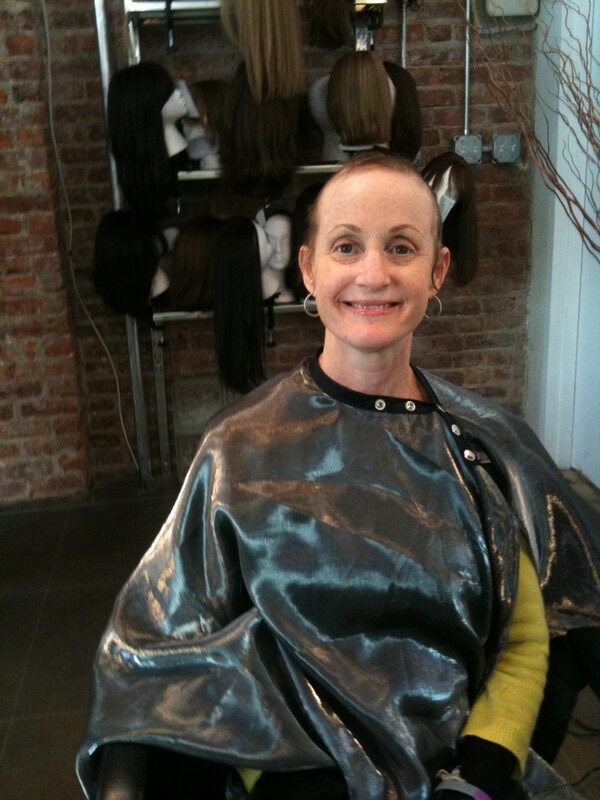
Hope preparing for a new wig after hundreds of chemotherapy treatments. This is how she would want to be remembered. She learned to be fearless, and every challenge was a new beginning for a positive future.
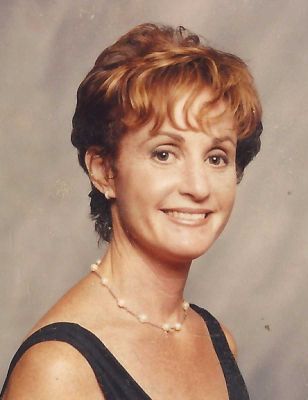
April 9, 2012
Hope’s obituary picture in Newsday newspaper.
Follow Along
The story continues—one chapter at a time.
New chapters will be released every two weeks.
Be sure to subscribe so you don’t miss what comes next.
Purchase Love, Loss, and Awakening